Ever wonder why, despite having many comforts, about 19.1% of U.S. adults battle anxiety and stress yearly? This piece looks deep into why that’s so. It talks about how these issues hit our mental health. Yet, there are ways to fight back and find peace and strength.
This guide goes over what to watch for, what sets off anxiety, and how to deal with it. By learning about these, you can take steps towards feeling better every day.
Key Takeaways
- Anxiety disorders affect approximately 19.1% of adults in the U.S. annually.
- Regular physical activity can significantly reduce anxiety symptoms by 20-40%.
- Only 36.9% of individuals suffering from anxiety disorders receive adequate treatment.
- Peer support has shown to improve mental health outcomes for 40% of participants.
- Panic attacks typically last between 5 to 30 minutes, with a racing heartbeat reported by 70% of those affected.
- Engaging in enjoyable activities can help alleviate anxiety and enhance overall quality of life.
Understanding Anxiety and Stress
Many people struggle with anxiety and stress during their lives. It’s important to know about these issues to help our mental health. Anxiety is how our body reacts to threats, causing us to feel tense and worried even when there’s no clear danger. Stress usually comes from outside stuff like work, family, or big changes in our lives. Together, they can really impact how we feel overall.
Definitions: What Are They?
Anxiety has different types, like generalized anxiety disorder (GAD), which makes people worry a lot. Panic disorder causes sudden fear attacks. PTSD happens after scary events, and social anxiety makes being around people really hard. Knowing these types helps us understand anxiety better.
Common Symptoms
Those dealing with anxiety and stress might feel this way:
- Worrying too much
- Feeling tense and restless
- Having headaches or body pain
- Heart beating fast and breathing quickly
- Struggling to sleep well
If someone has these symptoms a lot, they might be at risk for anxiety disorders or depression. It’s key to recognize these early to get help.
Causes and Triggers
Different things can cause anxiety and stress, from our thoughts to our biology. Some common reasons are:
- Thinking negatively
- Anxiety in the family
- Big life changes, like losing a job or having trouble in relationships
- Stress from work or deadlines
- Pressure from personal relationships and what society expects
Working on these issues can really help us handle our mental health better. This way, we can face less anxiety and stress every day.
The Impact of Anxiety on Daily Life
Anxiety affects how we feel and our health. It’s important to know how it effects on mental health. Anxiety can mess up our day-to-day activities and our relationships. People with anxiety might struggle to focus and get things done. This can make them feel upset and alone.
Effects on Mental Health
Anxiety hits our mental health hard. People with anxiety might also face depression or misuse drugs. About 4% of people worldwide deal with anxiety. That’s around 301 million people. Symptoms can start when we are young, making school and socializing hard. Spotting these signs early on is key. You can learn more about these signs here.
Physical Health Consequences
Long-lasting anxiety changes how we think and can harm our bodies. It makes us more likely to get heart diseases and high blood pressure. It can also make our muscles tight and cause heart problems. This makes us uncomfortable. Anxiety can upset our stomachs and weaken our immune system. This means we get sick more often. Dealing with anxiety is vital to keep our bodies healthy. This is very true if we already have health issues like asthma or COPD.
The Science Behind Stress Response
The body deals with stress through a special response. The fight or flight mechanism is key here. It gets us ready to either face dangers or avoid them. This reaction causes changes in the body that help us in the short term. By understanding this, we learn the difference between short-lived and long-term stress. We also see how lasting stress hurts our health.
The Fight or Flight Mechanism
This mechanism kicks in when we face real or imagined dangers. It leads to quick changes in the body. Examples include faster heart rate, adrenaline rush, and sharper senses. These changes help us deal with threats immediately. But, if stress keeps up, it’s bad for us. Continuous stress raises cortisol levels. This can cause heart problems, anxiety, and depression.
Long-term Stress Effects
Stress over time can harm our body and mind. High cortisol lowers our defense against illnesses. It also slows down healing. Long-term stress can upset our digestive system and hurt our reproductive health. It messes with women’s menstrual cycles and men’s sperm quality.
| Health Issue | Long-term Effects |
|---|---|
| Cardiovascular Disease | Elevated blood pressure, atherosclerosis due to inflammation |
| Anxiety Disorders | Increased anxiety and panic attacks due to heightened stress responses |
| Gastrointestinal Issues | Delayed gastric emptying and irritability in the bowel |
| Reproductive Health | Menstrual irregularities, reduced sperm quality |
To wrap it up, the stress response saves lives in the short term. However, being stressed all the time can badly affect our health. It’s important to know about these responses. This helps us handle stress better and stay healthier in stressful times.
Effective Coping Strategies for Anxiety
Finding ways to cope with anxiety is key to feeling calm again. This section talks about using mindfulness, relaxation, and writing things down. These can be great tools for people dealing with anxiety.
Mindfulness and Meditation
Mindfulness means living in the moment. It helps control your feelings better. Meditation is a big part of mindfulness. It lets you focus and push away unwanted thoughts. Studies show that being mindful can cut stress by about 25% if done regularly.
There are many ways to relax and feel less anxious. Try guided imagery, body scans, or just being in calming places. These methods are great for easing anxiety.
Deep Breathing Techniques
Deep breathing helps calm you down naturally. The 4-7-8 method works well. You breathe in for four seconds, hold it for seven, and exhale for eight. It helps reduce anxiety fast.
Box breathing is another good way to handle stress right away. You breathe in, hold, breathe out, and hold again, each for four seconds. This method is especially good when you’re very stressed.
Journaling for Clarity
Writing down your feelings helps make sense of them. It can show you what makes you react a certain way. This can lead to better anxiety management.
People who write regularly tend to feel less anxious. They also feel mentally healthier. Writing encourages you to think about your thoughts and feelings more.
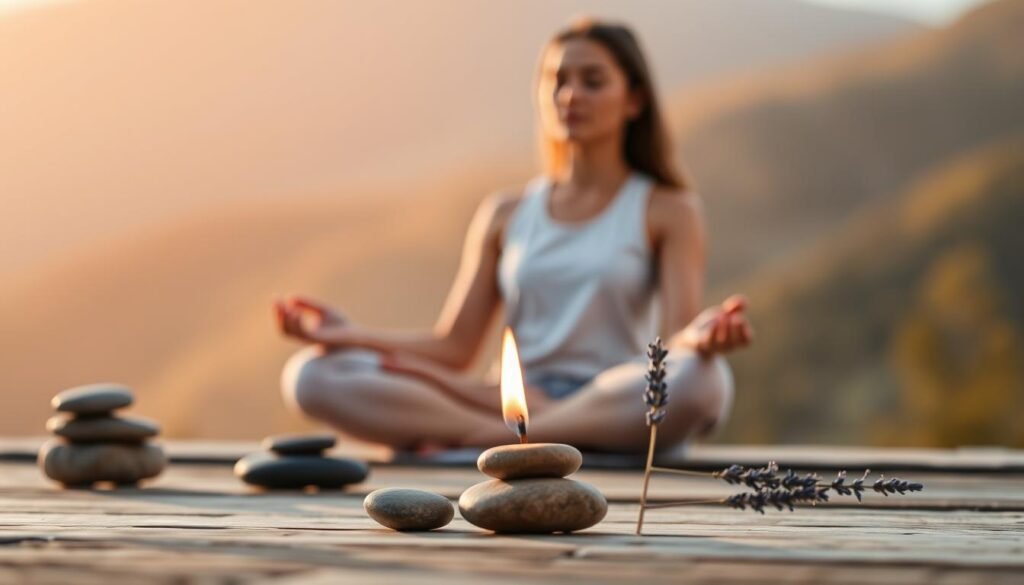
Using these strategies every day can make coping easier. Mindfulness, relaxing right, and journaling can really help with anxiety. To learn more about anxiety, check out these resources here.
Lifestyle Changes to Reduce Stress
Making changes to your lifestyle is key to managing stress and boosting your well-being. Adopting healthy habits can help lessen stress. It gives you a sense of control. Tips for decreasing stress include regular exercise, eating right, and getting enough sleep.
The Role of Exercise
Exercise makes your body release endorphins, which make you feel happier. The CDC suggests at least 150 minutes of exercise like walking or cycling each week. This can lower stress levels and lift your mood. Even a short walk can make you feel less stressed right away.
Nutrition and Mental Well-being
Eating a balanced diet is crucial for your mental health. It’s important to eat mindfully and choose whole foods over processed ones. People who eat healthier often feel less stressed. Good nutrition keeps your body running and supports your mental health, too.
Sleep Hygiene Tips
Getting enough sleep is vital for managing stress and keeping your emotions stable. Adults should aim for 7 to 9 hours of sleep each night. A regular sleep schedule and a peaceful bedtime routine can improve your sleep quality. Sleeping well helps control your mood, gives you energy, and makes you more resilient to stress.
| Aspect | Benefits | Recommendations |
|---|---|---|
| Exercise | Boosts mood; reduces stress hormones | 150 minutes of moderate-intensity per week |
| Nutrition | Supports mental health; lowers anxiety | Focus on whole foods; limit ultra-processed items |
| Sleep | Enhances mood; improves focus | 7-9 hours per night; maintain a regular schedule |
Seeking Professional Help
It’s key to know when to seek help for stress and anxiety. Many people face challenges that affect their daily lives, leading them to seek a therapist. About 1 in 5 adults in the U.S. deal with mental illness each year. So, knowing the treatment choices is key.
When to Consult a Therapist
If anxiety starts to really disrupt your life, it’s time to get help. Signs to watch for include ongoing worry, feeling restless, or having a fast heartbeat. Getting help early can stop bigger mental health issues and make life better.
Types of Therapy for Anxiety
There are many good ways to treat anxiety. Cognitive-behavioral therapy (CBT) is very effective. It helps people change how they think and react to stress. There are also things like exposure therapy and mindfulness. Each method has its benefits, helping people handle anxiety better.
Benefits of Medication
Sometimes, adding medication to your plan can really help. It can ease symptoms of anxiety. This makes it easier to get the most out of therapy and enjoy life. Over 80% of those treated for depression see improvement. Talking with doctors about the best plan for you is very important.
Building a Support System
Having a strong support system is key to managing anxiety well. Social connections offer emotional support and fight loneliness. People who feel alone face a higher chance of health problems, like heart disease and memory issues. Being part of support groups creates a feeling of belonging. Members can share their stories and ways to cope. This strong social bonding leads to better health and the ability to bounce back from problems.
Importance of Social Connections
Social bonds are crucial before stress hits. They provide help and emotional support in tough times. Studies show loneliness can lead to bad health effects. It’s vital to build meaningful connections. Activities like joining exercise classes or volunteering help make these links, boosting mental health. Giving support to others can benefit us more than getting help. Both real-life and online group activities strengthen these helpful relationships.
Role of Support Groups
Support groups give a safe place to talk about mental health. Joining lets people connect with those facing similar issues, easing the shame tied to anxiety and stress. Sites like anxiety support groups are key in building these connections. People active in support groups tend to have lower anxiety and control their emotions better. Being part of such a group boosts how we deal with stress and improves mental health.
Stress Management Techniques
Today’s world is really fast-paced, making it key to manage stress well. People often feel stress in both their bodies and minds. Learning to manage time can help lessen these feelings. When you plan out what you need to do, you feel more in control. Also, knowing when to stop working makes for a better balance between work and fun.
Time Management Skills
Getting better at managing time can really cut down on stress. Knowing what needs to get done first and planning your time wisely helps. Try doing these things:
- Create daily to-do lists to stay organized.
- Break larger tasks into manageable steps.
- Set specific time limits for completing tasks.
- Delegate responsibilities when possible.
- Learn to say no to tasks that exceed personal limits.
Setting Boundaries
It’s key to set boundaries for lowering stress. This means making clear rules for yourself so you can be okay mentally. To do this, try the following:
- Communicate expectations clearly with colleagues and loved ones.
- Identify personal needs and allocate time for self-care.
- Limit availability during personal time to enhance relaxation.
- Establish ‘no work’ zones in home environments to encourage downtime.
Using these strategies can really help manage stress better. This doesn’t just help at work but improves life in general. With 80% of workers feeling job stress and nearly half seeking ways to handle it, mastering time management and setting boundaries has never been more crucial.
| Action | Benefit |
|---|---|
| Creating to-do lists | Enhances organization and clarity |
| Delegating tasks | Reduces workload and stress |
| Setting clear boundaries | Protects personal time and mental health |
| Prioritizing tasks | Improves focus and efficiency |
Resources for Ongoing Support
Facing anxiety and stress head-on is tough. But, there’s good news because ongoing support can make a big difference. Today, there are many tools out there to help. You can use mental health apps, read insightful books, and take online courses to get better.
Apps and Tools for Anxiety Relief
Apps like Headspace and Calm teach us how to be mindful and less stressed. These tools are great because you can use them anytime, anywhere. Plus, online mental health services are becoming more common. In fact, 80% of people who use them say they really help.
Books and Online Courses
If you want to dive deeper into managing anxiety, there are books and courses that can help. For example, “The Anxiety and Phobia Workbook” has exercises that are very useful. Platforms like Coursera also have courses that teach you how to cope better. These resources give you the knowledge to create positive change.
Helplines and Organizations
When things get really tough, helplines and organizations are there to help us. For instance, the National Suicide Prevention Lifeline and SAMHSA are available 24/7. There are groups dedicated to helping those with anxiety. It’s really important to reach out and get the help you need.
FAQ
What is the difference between anxiety and stress?
What are some common symptoms of anxiety?
How can mindfulness help in managing anxiety?
When should someone seek professional help for anxiety?
What lifestyle changes can help reduce stress?
What are some effective coping mechanisms for stress management?
How can I build a support system to cope with anxiety?
What role does nutrition play in mental health?
What resources are available for ongoing support in managing anxiety?
Source Links
- Get help with anxiety, fear or panic
- Anxiety self-help guide
- Stress and Anxiety: How They Differ and How to Manage Them
- I’m So Stressed Out! Fact Sheet
- Anxiety disorders
- Effects of Anxiety on the Body
- Physiology, Stress Reaction – StatPearls
- Neurobiological links between stress and anxiety
- Tips and Strategies to Manage Anxiety and Stress
- Coping Strategies for Anxiety and Stress – CommuniHealth Services
- Stressors: Coping Skills and Strategies
- 12 tips to tame stress
- Stress and Health – The Nutrition Source
- 16 Simple Ways to Relieve Stress and Anxiety
- Help for Mental Illnesses
- Get Professional Help If You Need It
- How to Build a Support System For Your Mental Health | MyWellbeing
- Developing Your Support System
- Stress Management: Techniques to Deal with Stress
- Managing Stress
- Digital Shareables on Anxiety Disorders
- Online Resources | Anxiety and Depression Association of America, ADAA
- Anxiety and Depression Association of America, ADAA