Many people in the United States deal with anxiety pain. It often links to other mental health issues. About 31% of adults will face anxiety disorders during their lives. These challenges can deeply affect both mind and body. Thus, finding ways to ease pain is key for those facing anxiety pain. It hugely disrupts daily life and overall health.
The close connection between anxiety and physical symptoms is clear. Symptoms like a fast heartbeat and tight muscles highlight the need for good coping strategies. Since anxiety disorders have wide effects on society, it’s crucial to learn how to handle anxiety pain.
Key Takeaways
- Anxiety disorders affect a significant portion of the population, often causing both emotional and physical distress.
- Pain relief is crucial for managing symptoms associated with anxiety disorders.
- Understanding the connection between anxiety and pain can lead to better coping mechanisms.
- Effective strategies exist for managing anxiety pain, including therapy and lifestyle changes.
- Seeking professional help can provide additional support for individuals experiencing anxiety pain.
Understanding the Connection Between Anxiety and Pain
Many people don’t see the deep link between anxiety and body pain. To understand anxiety, we must explore how emotions and thoughts affect pain perception. Studies show that anxiety impacts both our minds and bodies, leading to different pain issues.
The Science Behind Anxiety Pain
Recent studies show anxiety leads to stress hormones like adrenaline and cortisol release. This makes people with anxiety feel more pain. Chronic pain is often seen in those with generalized anxiety disorder (GAD). It’s found that anxiety is common in up to 50% of chronic pain sufferers. This shows how managing anxiety is key to treating pain effectively.
How Anxiety Affects Pain Perception
Anxiety can greatly change how we feel pain. Those with anxiety may feel pain 20% to 30% more intensely. Anxiety and pain feed into each other, causing a cycle of increasing discomfort. However, regular exercise can significantly lower both anxiety and pain by 30%. For more info on how anxiety affects the body and its link to chronic pain, check here.
Common Types of Anxiety-Related Pain
Anxiety can cause different types of pain, showing how our minds and bodies connect. It’s key to know these types to see how anxiety impacts our lives. Anxiety symptoms can vary from mild discomfort to severe pain, affecting people differently.
Muscle Tension and Headaches
Muscle tension is a common sign of anxiety. It can lead to headaches that are hard to handle for many. Long-term anxiety often causes the muscles in your neck, shoulders, and jaw to stay tight. This can lead to headaches that get worse when you’re stressed. This cycle makes the emotional pain of anxiety even harder to deal with.
Gastrointestinal Discomfort
Stomach issues are also linked to anxiety. You might feel sick, have stomach cramps, or not feel like eating. These problems come from how your body reacts to stress. When anxious, it’s common to have stomach pains or discomfort, especially during stressful times.
Chest Pain and Heart Palpitations
Chest pain or fast heartbeats can be really scary when you’re feeling anxious. These symptoms can feel like you have a heart problem. Anxiety makes you more aware of your body, leading to a faster heartbeat and chest tightness. Knowing that anxiety can cause these symptoms may help people not worry they have a heart disease but understand it’s anxiety.
Coping Strategies for Managing Anxiety Pain
Dealing with anxiety pain can be tough. But there are great coping strategies to help people feel better. Things like breathing exercises, staying mindful, and being active can really help. They make you stronger emotionally and lessen anxiety.
Breathing Techniques for Instant Relief
Breathing exercises like deep breathing and box breathing offer fast help for anxiety. These relaxation techniques bring calm. Just breathe in deeply, hold it, and then breathe out slowly. This calms the body’s stress reaction.
Mindfulness and Meditation Practices
Mindfulness and meditation are key for fighting anxiety. They help you stay in the moment and cut down on worrying thoughts. Doing meditation regularly trains your brain to cope better with stress. It also has long-term perks for mental health, helping a lot with anxiety pain.
Physical Activity and Its Benefits
Being active is crucial for mental wellness. The American Heart Association suggests about 2½ hours of exercise each week. Doing things like fast walks or yoga often can boost your mood and decrease stress. Even just a little bit of exercise can have a big impact on anxiety pain.
| Type of Activity | Duration | Frequency | Mental Health Benefit |
|---|---|---|---|
| Brisk Walking | 30 minutes | 3-5 times/week | Enhances mood and reduces anxiety |
| Yoga | 30-60 seconds (short bursts) | Daily | Boosts mood and calms the mind |
| Community Activities | As needed | Ongoing | Provides social support |
Making these strategies part of your daily life is key for managing stress better. By trying out different relaxation methods and sticking with them, you can greatly improve how you deal with anxiety pain.
Dietary Changes That Help Alleviate Anxiety
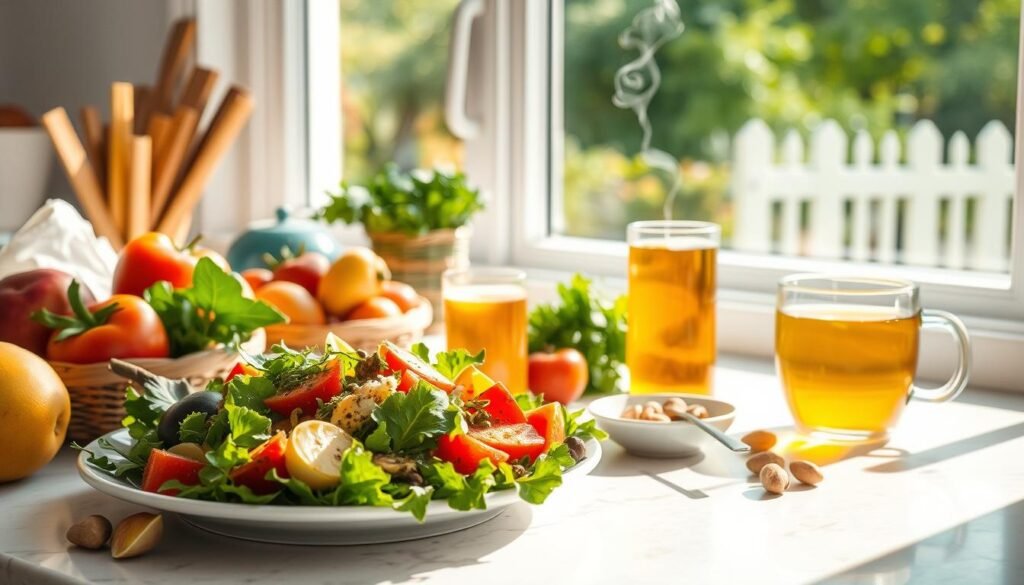
Eating healthy is key to controlling anxiety. It helps keep your mind clear and your emotions stable. Studies show that some foods can calm you down. Adding foods full of nutrients to your meals can improve your mood and reduce anxiety.
Foods to Eat for Mental Clarity
Start your day with protein-rich foods to keep your blood sugar steady. This helps you stay energized and in a good mood all day. Whole grains help increase serotonin in your brain, making you feel calm.
Eat omega-3 rich foods like salmon, nuts, and seeds for better mental health. These foods are linked to lower anxiety and happier moods. Vitamin C-rich foods like citrus fruits and bell peppers help reduce inflammation and support your mental health.
Hydration and Its Role in Emotional Well-Being
Staying hydrated is very important for emotional health. Even being a little dehydrated can make you more anxious. Drinking plenty of water helps your brain work best and keeps you steady.
Too much caffeine can make you jittery. Drinking less caffeine, especially before bedtime, can help you sleep better and feel less anxious. Knowing how certain foods affect your mood is also key in managing anxiety well.
Seeking Professional Help for Anxiety and Pain
About 31.1% of U.S. adults will face anxiety sometime. Unfortunately, only 36.9% of them get help. Knowing when it’s time to see a therapist is key. When usual methods don’t work, getting professional help can help manage anxiety and pain.
When to Consult a Therapist
If anxiety stops you from doing everyday things, hurts your relationships, or gets worse, it might be time to get mental health support. Seeing a doctor first can check if a health issue is causing the anxiety. Getting help early, especially within the first year of symptoms, can improve your future health. If you’re dealing with heavy anxiety or also feeling depressed, finding a therapist quickly is important.
Types of Therapy Options Available
Cognitive Behavioral Therapy (CBT) is a top choice for treating anxiety. There are other methods too, like exposure therapy and mindfulness-based therapy. These can build coping skills and strengthen your mental resilience. Therapy plus medication usually works better than either alone. Some states let trained psychologists prescribe medicines, making care more accessible.
Utilizing Medication Effectively
Medication is a big part of treating anxiety, along with therapy. Drugs like antidepressants and benzodiazepines can help, but it’s important to use them right to avoid addiction. A psychiatrist can make sure your medication plan is safe and effective. Always talk to a doctor before changing meds, to keep your mind and body healthy. For more on getting help with anxiety, check out this resource.
The Role of Social Support in Managing Anxiety
Social support is key in handling anxiety. It helps lessen the feeling of being alone. Having people around, like friends or family, makes dealing with anxiety and pain easier. They offer an understanding space which is important when times get tough.
Building a Support Network
Connecting with people has a big impact on mental health. Studies show that those without friends are more likely to face major health problems within nine years than those with support. Having trustworthy friends reduces stress, encourages good coping habits, and improves well-being.
Importance of Open Communication
Talking about your feelings is crucial when dealing with anxiety. Open talks in your circle help everyone understand and reduce wrong ideas. Sharing what you’re going through helps you feel seen and aids in better managing anxiety. Those who talk about their mental health feel less anxious and stressed, making life more stable.
| Study Focus | Findings |
|---|---|
| Social Support and Health Risks | Individuals without social ties face significantly higher health risks, similar to those linked with obesity and smoking. |
| Support and PTSD | High social support leads to a 180% reduction in PTSD likelihood among veterans. |
| Chronic Pain and Emotional Distress | Social support correlates with less pain severity, benefiting those suffering from chronic pain. |
| Communication and Coping | Open communication about anxiety reduces stigma and fosters a supportive environment. |
Having a strong network and being good at communicating is key in managing anxiety. This helps you deal with challenges better and improves emotional health.
Natural Remedies to Consider for Relief
Exploring natural remedies can help manage anxiety and pain. Herbal supplements and aromatherapy are popular for their calming effects.
Herbal Supplements for Anxiety
Some herbal supplements can lessen anxiety. Chamomile may cut anxiety symptoms in half after regular use. Another herb, Valerian root, is known for helping with relaxation.
- Chamile: May significantly reduce anxiety levels.
- Valerian Root: Commonly used for its calming effects on the nervous system.
- Passionflower: Often employed to ease anxiety and improve sleep quality.
Aromatherapy for Emotional Support
Aromatherapy uses essential oils for many benefits. Lavender oil has helped reduce anxiety by 30% in some studies. It’s popular for its calming scent which can improve mood. Bergamot and ylang-ylang also offer soothing properties during stress.
| Essential Oil | Primary Benefit | Recommended Use |
|---|---|---|
| Lavender | Reduces anxiety | Diffusion, inhalation, topical application |
| Bergamot | Improves mood | Diffusion, bath infusion, massage oil |
| Ylang-Ylang | Calming and uplifting | Inhalation, topical application |
Using these natural remedies can boost emotional health. But, check with health professionals before starting new supplements or aromatherapy to ensure they’re safe for you.
Creating a Personal Self-Care Routine
Making your own self-care routine is key to dealing with anxiety and getting mentally stronger. Doing things for your well-being regularly can help you feel less stressed. They also get you ready to handle life’s challenges better. Adding good habits, like making sure you sleep enough and setting personal limits, can make you feel happier.
Importance of Regular Sleep Patterns
Having a regular sleep schedule is very important for keeping your mind clear and emotions balanced. Not sleeping well can make anxiety worse. And it can cause health problems too. Sleep hygiene means doing things that help you sleep better, like going to bed at the same time every night and making your bedroom comfortable. Good sleep helps you handle stress better and think more clearly, which is important for your daily life.
Setting Boundaries and Saying No
It’s also important to set healthy limits for yourself. Thinking about and choosing what you commit to can protect your mental health. It can also stop you from feeling too busy. People who set clear limits usually feel less stressed. This helps them use their time well, which is a big part of managing stress.
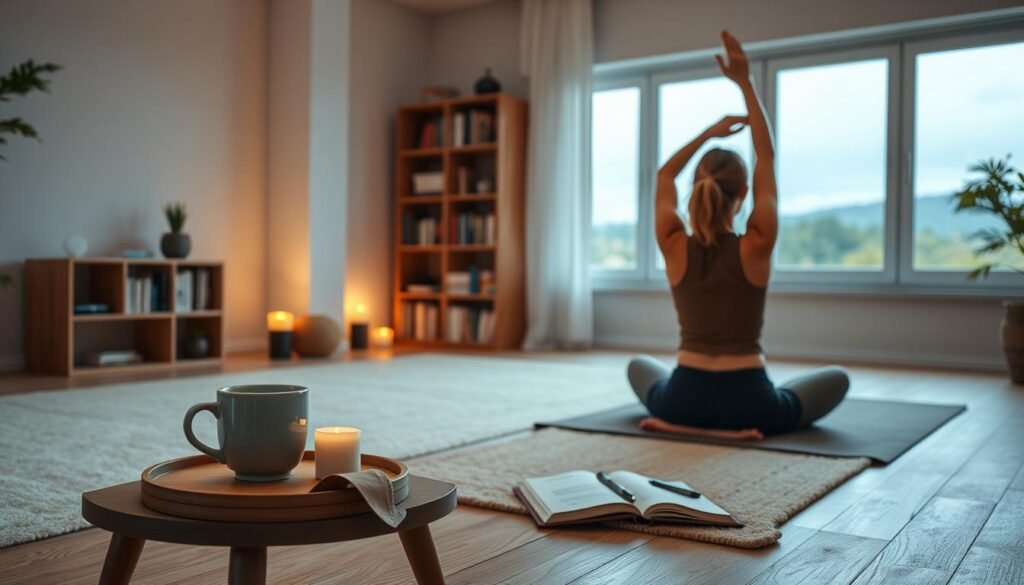
Self-care routines can include taking care of your body, feelings, and spirit. Your routine might change when things in your life change; it’s normal to take breaks from your routine. It usually takes about 66 days to start a new habit, so keeping at it is important. Self-care has proven to lower anxiety and make people happier. Around 80% of people who keep up with self-care feel more energized. Mixing up your self-care activities, whether you do them every day or not, can keep things interesting and help you deal with anxiety better.
Using the S-M-A-R-T way to set goals can make it easier to create a good self-care plan. Understanding how important sleep hygiene is and how it’s connected to anxiety is crucial. In the end, people who make self-care a priority usually feel better about their mental health and emotions.
Staying Positive: Inspirational Tips
Keeping a positive outlook is key when dealing with tough times. Being thankful helps build emotional strength. A simple act, like writing down what you’re grateful for daily, can change your outlook. Studies show that gratitude improves your mental and physical health. It helps you see the good in life, not just the bad. This shift towards seeing the good helps us deal with stress better.
Hearing how others beat anxiety and pain is uplifting. Many say positive thinking reduced their distress and made them healthier. For example, positive folks often face less depression and pain. They even have better heart health. These stories show us that a positive outlook, a good plan, and friends can help overcome challenges.
Using these tips daily can build hope. Being active and having supportive friends boosts happiness. Focusing on important things, like family, lifts your spirits. It shows that beating anxiety with a positive attitude and hard work is possible.
FAQ
What is anxiety pain and how is it related to physical health?
How can anxiety exacerbate physical pain sensations?
What are some common physical symptoms associated with anxiety?
What are effective coping strategies for managing anxiety pain?
How does diet impact anxiety symptoms?
When should someone seek professional help for anxiety?
How does social support help in managing anxiety and pain?
What natural remedies can assist in relieving anxiety pain?
What are some self-care practices to manage anxiety pain?
How can maintaining a positive outlook be beneficial in managing anxiety pain?
Source Links
- Get help with anxiety, fear or panic
- Natural Remedies for Anxiety: 10 Ideas
- Chronic Pain | Anxiety and Depression Association of America, ADAA
- Center for Pain Medicine
- Anxiety disorders – Symptoms and causes
- What are Anxiety Disorders?
- Tips and Strategies to Manage Anxiety and Stress
- How to Cope with Anxiety: 11 Simple Tips
- Find out how food and anxiety are linked
- 9 Foods to Help Reduce Anxiety
- 9 foods that help reduce anxiety
- Doctors Who Treat Anxiety: What to Say and Ask
- Anxiety Disorders
- Social Support and Resilience to Stress: From Neurobiology to Clinical Practice
- The Interconnection Between Social Support and Emotional Distress Among Individuals with Chronic Pain: A Narrative Review
- Natural Remedies to Alleviate Anxiety
- 10 natural remedies for reducing anxiety and stress
- How To Start a Self-Care Routine (and Stick To It)
- How to Establish a Self-Care Routine That Actually Sticks (5 min read)
- How to stop negative self-talk
- How a Positive Attitude & Being Thankful Can Help Chronic Pain
- How to Stay Positive with Chronic Pain – Alis Behavioral Health