Did you know that almost 85% of people feel low self-esteem at some stage? This issue can have a big impact on mental health, especially in kids. Many times, body anxiety makes people feel bad about how they look. This can make them question their value.
In today’s world, where we often compare ourselves to others, it’s key to build confidence. This helps in creating a positive view of our bodies.
This piece explores ways to fight body anxiety. It aims to help people feel good about their bodies and mental state. Natural methods like being kind to oneself and setting real goals can beat the bad feelings tied to low self-esteem. Knowing what you’re good at and having supportive friends also play a big role in feeling better about yourself. For extra advice, have a look at this resource for great tips on boosting self-confidence.
Key Takeaways
- Low self-esteem often has roots in childhood and can affect mental health long-term.
- Negative life events, like serious illnesses, can exacerbate feelings of inadequacy.
- Avoiding challenging situations reinforces doubts and fears, perpetuating low self-esteem.
- Recognizing strengths and fostering positive relationships are vital for building self-worth.
- Challenging negative beliefs and adopting assertiveness can help improve self-esteem.
- Supportive therapies, such as counseling, can be effective in addressing low self-esteem.
- Replacing negative thoughts with positive affirmations is key to overcoming body anxiety.
Understanding Body Anxiety and Its Impact on Self-Confidence
Body anxiety affects self-esteem due to insecurities about appearance. About 9% of people have anxiety disorders related to body image. This can make someone avoid social events, lowering their confidence. Studies show a link between negative body image and more social anxiety.
Negative feelings about one’s body make socializing harder. People with these feelings are three times more likely to have social anxiety compared to those who feel good about their bodies.
The effects of body anxiety on mental health are vast. In the US, 30 million people deal with eating disorders from body dissatisfaction. A negative view of one’s body increases the risk of depression by four times.
This information highlights how body anxiety impacts self-esteem. Understanding this connection is crucial.
Both men and women struggle with negative body image, though they may handle it differently. Women often internalize their concerns, while men might not show them. This can lead to depression, anxiety, and loneliness.
Improving body image is vital for mental health. Practicing mindfulness and self-compassion can boost emotional well-being. These steps help everyone feel better about themselves.
For more information on this topic, you can read detailed studies. Systematic research articles offer deep insights.
Recognizing Body Image Issues
Body image issues start when people compare themselves to others. This problem gets worse with social media like Instagram. 30% to 80% of young people are not happy with how they look. This leads to feeling not good enough and anxious in social settings.
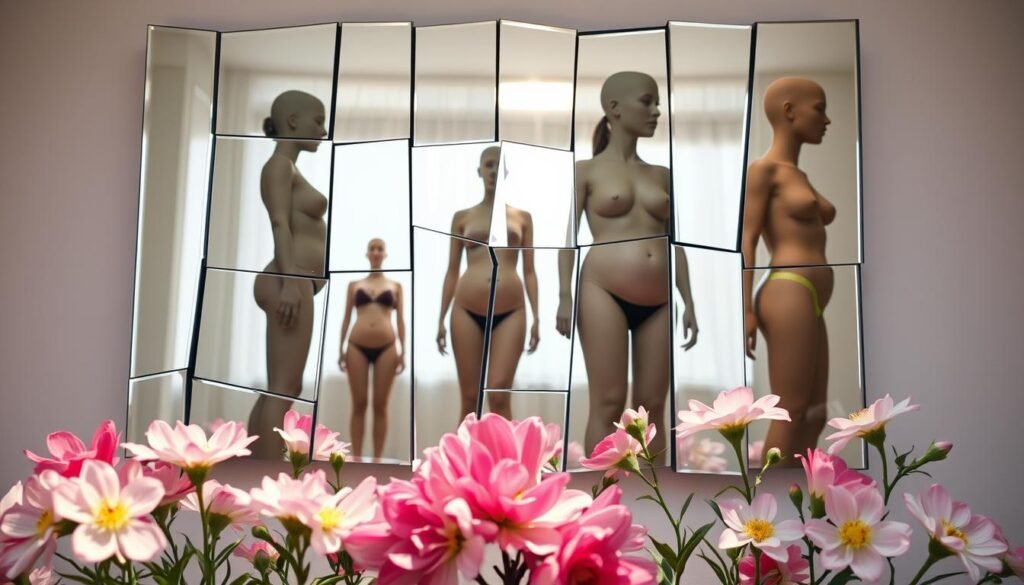
Seasons changing can make these feelings stronger. New routines or activities might make someone feel more stressed or anxious. Studies show about one-third of U.S. teens have anxiety. Being unhappy with your body can make this anxiety worse.
To make a change, we must first see the problem. Understanding negative thoughts helps start the journey toward liking yourself. Doing things with others can help fight social worries. Finding a safe and accepting group is key to feeling better.
If you’re finding things tough, talking to a therapist can help a lot. It’s important to get help early. This can stop the problem from getting bigger. Knowing more about body image can help manage these worries.
It’s key to realize the pressure society puts on us. Understand how it mixes with personal doubts. This understanding can help see ourselves in a better light. It can also build strength against feeling anxious around others.
For more info on dealing with body image problems, visit this resource.
Exploring the Connection Between Physical Insecurities and Anxiety
Physical insecurities can deeply affect someone’s mental state. This leads to a cycle of anxiety that’s hard to escape. People often worry about how they look, feeling self-conscious. This can turn into anxiety.
Studies show the link between feeling bad about one’s body and anxiety. Body shaming plays a big part in this. It makes the anxiety worse.

About 25.3% of people see themselves as “overweight.” Another 20.4% used to think the same. This shows many struggle with body image issues. People unhappy with their bodies often feel more anxious in social settings. They also tend to have lower overall self-esteem. A big 35% of youths worry about how they look, showing it’s a major issue for their happiness.
Trying to meet society’s beauty standards adds to these feelings. The beauty industry, worth a lot, targets these insecurities. It makes people more anxious. Social media makes it worse. Around 40% of young folks feel bad after seeing online images. They worry even more about their looks.
Body dysmorphia can come from these insecurities. It makes people fixate on minor flaws. This thinking leads to harmful actions. There’s a clear link between disliking one’s body and mental health problems. It affects both how one feels inside and acts with others.
Understanding the tie between anxiety, physical insecurities, and body shaming is crucial. We need open discussions on these topics. It’s the key to feeling better about ourselves and our bodies.
Addressing Low Self-Esteem and Its Effects on Well-Being
Low self-esteem can start a cycle of emotional pain. It hurts mental health. People with this issue often see themselves in a bad light. This leads to doubting themselves and staying away from new things. This issue often starts early in life due to bullying or not getting enough emotional support.
Studies show low self-esteem is linked to mental health problems. This includes anxiety, depression, and thinking about suicide. A 2019 study with Vietnamese students showed this clearly. Students with low self-esteem often felt more emotional pain.
Stress from school and emotional harm can lower self-esteem. This can lead to bad eating habits. A 2021 study found a link between not liking oneself and unhealthy eating. Talking therapy can help change negative thoughts and improve self-worth.
Thinking positively helps fight these negative beliefs. It’s key to feeling better. Saying hopeful things to yourself, forgiving your mistakes, and thinking about the good in life are strategies that help. Acceptance therapy helps people face and accept their bad feelings instead of fighting them.
Being physically healthy is important too. Exercise, eating well, and doing fun activities make you feel better about yourself. Taking care of low self-esteem early helps improve your life. This includes better relationships, doing well at work, and being healthier.

| Impact of Low Self-Esteem | Associated Issues |
|---|---|
| Negative Self-Image | Anxiety and Depression |
| Self-Doubt | Disordered Eating |
| Avoidance of Activities | Substance Abuse |
| Relationship Struggles | Antisocial Behavior |
It’s crucial to deal with low self-esteem to improve mental health. With the right help and strategies, people can rebuild their self-worth. This can change their life for the better.
Building Positive Relationships to Combat Body Shaming
Having supportive friends and family is key to feeling good about ourselves. These relationships help us accept our bodies as they are. They also protect us from the harm of body shaming, letting us be unique.
But, creating such positive bonds takes real effort. It’s important to think about how the people in our lives make us feel about ourselves.
Good friendships boost how we see ourselves and our bodies. To build these important connections, consider these points:
- Foster open communication: Make sure everyone can share openly without fear of being judged.
- Engage in uplifting activities: Do things that make everyone feel good about their bodies, like going to wellness events.
- Limit exposure to negative influences: Stay away from people who make you feel bad about your body.
Surrounding ourselves with the right people makes us feel better about who we are. It’s also crucial to know how social media can make us feel worse. Setting boundaries on social media use can prevent those bad feelings.
| Positive Aspects of Supportive Relationships | Negative Influences of Toxic Relationships |
|---|---|
| Encourages self-acceptance | Promotes body shaming |
| Improves self-esteem | Generates feelings of inadequacy |
| Provides emotional support | Increases anxiety and stress |
| Fosters healthy body image | Perpetuates negative body perceptions |
Building strong and healthy relationships is vital for fighting against body shaming. It’s worth the effort to deepen these connections for a better self-image and overall happiness.
Strategies to Overcome Body Anxiety
To beat body anxiety, it’s key to build a positive mind and better self-esteem. Mental dialogue plays a huge role in changing how we see ourselves. By adopting certain methods, you can lessen body anxiety.
Challenge Negative Self-Talk
Challenging negative thoughts is a vital first step. Don’t let harsh internal voices control you. Instead, shift them towards something positive. When you doubt yourself, pinpoint the exact negative thoughts.
Then, swap them with positive ones. Think about what you’re good at or proud moments. This can ease feelings of not being good enough.
Set Achievable Goals
Setting goals that you can reach helps build confidence. Start with small, achievable targets to see real progress. Celebrating small wins boosts your sense of achievement. It helps you stay positive.
Breaking big goals into smaller tasks makes things less daunting. It creates a more supportive path to success.
Practice Self-Compassion
Being kind to yourself is crucial in overcoming body anxiety. Remember, it’s normal to not be perfect. Instead of trying to fix every flaw, learn to accept them.
This acceptance leads to genuine growth. Loving yourself reduces anxiety and improves mental health.
These strategies help tackle body anxiety and push for better self-care. For more on linking anxiety with solutions, explore further. A cycle of self-compassion, realistic goals, and fighting negative thoughts promotes self-love.
Natural Ways to Boost Self-Confidence
Building up your self-confidence makes a big difference in your life. Things like eating right and staying active are key. They help not just with your body’s health, but also make you feel better about yourself.
Nutrition and Its Role in Confidence
What you eat is super important for feeling confident. A diet full of good stuff – like vitamins and nutrients – keeps you going. It also helps your mood. Here’s what to keep in mind:
- Eating whole foods like fruits, veggies, lean meats, and grains is great for both your mind and body.
- Adequate hydration helps your brain work better and keeps you feeling happy, which boosts confidence.
- Consuming omega-3 fatty acids, like those in salmon and walnuts, can improve your brain health and how you feel emotionally.
The Benefits of Regular Exercise
Working out does more than just make you strong. It’s a powerful way to feel more confident. Being active leads to:
- Enhanced body image: Getting in shape makes you see yourself in a better light.
- Increased endorphin production: Exercise makes your body release endorphins, making you happier.
- A sense of accomplishment: Achieving fitness goals makes you feel successful, boosting your self-esteem.
By choosing healthy foods and exercising, you help your confidence grow. Taking action to be well makes you feel in charge of your life. This way, you’re setting yourself up for a more confident and joyful existence.
| Natural Confidence Boosters | Impact on Self-Esteem |
|---|---|
| Balanced Nutrition | Improved mood and energy levels |
| Regular Exercise | Enhanced body image and endorphin release |
| Mindful Hydration | Better cognitive function and emotional stability |
| Setting Achievable Goals | Increased sense of accomplishment |
Emotional and Mental Health Considerations
Understanding body anxiety is key to addressing emotional and mental health. Many people are overwhelmed by societal expectations. They often feel not good enough. Around 6.8 million adults in the U.S. face generalized anxiety disorder each year. This affects their mental and physical health.
It’s vital to see how anxiety and emotional health are linked. Long-term anxiety can release stress hormones. This can cause headaches, dizziness, and even depression. It may also lead to serious issues like high blood pressure and heart disease. Plus, anxiety can upset your stomach, leading to problems like stomachaches.
Managing anxiety well is crucial. It can involve therapy or relaxation techniques. Many with social anxiety don’t get help for a long time. We need to support them better. Knowing how mental health impacts our physical state is important for overall well-being.
We must focus on building confidence and emotional strength. Getting help can greatly improve life quality. For more on how anxiety affects us, read this detailed article.
Conclusion
Many people work through body anxiety, shaped by society and personal stories. It’s key to build a positive view of oneself for mental wellness. Using tips like fighting negative thoughts and valuing supportive friends can start a journey of self-confidence. It’s crucial to note that around 40 million in the U.S. face anxiety disorders, showing how common it is.
Unfortunately, few seek help, which shows we need more awareness and open talks. Valuing our special qualities and using methods such as exercise and mindfulness help lessen anxiety. Recognizing society’s roles, it’s vital to help folks move past body anxiety and grow self-confidence.
Overcoming body anxiety is an ongoing process, not a one-time achievement. Support from others is incredibly important in this path. By aiming for a positive self-view and being true to oneself, people can better manage their emotions. This leads to improved emotional health and strength.