About 31.1% of U.S. adults will face an anxiety disorder at some stage. This fact shows how common mild anxiety is. It’s often seen as just daily stress. Yet, symptoms of mild anxiety can slightly affect day-to-day life without someone knowing. Knowing these signs early can greatly better life quality.
This piece sheds light on mild anxiety, its causes, and how to spot its signs. With this knowledge, people can address their anxiety early. It offers advice on managing symptoms and finding relief. It also suggests resources, methods, and life adjustments for those with mild anxiety to get help and develop better coping skills.
Key Takeaways
- Mild anxiety affects many individuals, often unnoticed in daily life.
- Recognizing mild anxiety symptoms is critical for early intervention.
- Effective coping strategies can help mitigate the impact of anxiety.
- Support and treatment options are available for those who need help.
- Healthy lifestyle changes can improve overall mental health and anxiety management.
Understanding Mild Anxiety: Definition and Context
Mild anxiety is a normal reaction to stress. It shows up as worries that come and go, not deep fears. While it’s common to feel this way at times, it’s different from severe anxiety disorders. Knowing this difference helps us handle mild anxiety better.
What is Mild Anxiety?
Mild anxiety usually means feeling uneasy about day-to-day things. These feelings are short-term and not too hard to handle. Unlike severe anxiety, which can stop you from doing everyday tasks, mild anxiety doesn’t have such strong effects. It might even make you look for ways to solve what’s bothering you.
Differentiating Between Mild and Severe Anxiety
It’s important to know the difference between mild and severe anxiety. Severe anxiety can really disrupt life. It might keep people from facing certain situations or cause panic attacks. Those with severe anxiety can have moments that feel out of control, and they might need urgent help. But mild anxiety doesn’t stop you from living your life. It just means you have worries to manage.
Common Causes of Mild Anxiety
Life stresses can lead to mild anxiety. This can be work, exams, or money troubles. Health problems or genetics might play a role too. Knowing what triggers your anxiety can help stop it from getting worse.
| Type of Anxiety | Prevalence in Adults | Key Characteristics |
|---|---|---|
| Mild Anxiety | Common | Manageable worries, temporary symptoms |
| Generalized Anxiety Disorder | 2.9% | Excessive, uncontrollable worry about various aspects of life |
| Social Anxiety Disorder | 7% | Intense fear of social interactions and embarrassment |
| Panic Disorder | 2-3% | Recurrent, unexpected panic attacks |
Recognizing the Symptoms of Mild Anxiety
Knowing how to spot mild anxiety is key to dealing with it well. It shows up in different ways, like feeling emotional, having physical symptoms, or acting differently. These signs might get in the way of everyday life. Spotting them early can help manage anxiety better and boost mental health.
Emotional Symptoms
Mild anxiety can make you feel restless, tense, or easily annoyed. You might worry a lot about normal things or feel a dread for no specific reason. It’s important to notice these feelings early to tackle mild anxiety.
Physical Symptoms
For some, mild anxiety speeds up the heart, causes fast breathing, or stomach troubles like nausea. Sweating and stiff muscles are common too. These physical signs can make anxiety worse, creating a hard-to-break cycle.
Behavioral Symptoms
Anxiety might lead to avoiding things that make you uneasy. It can also make focusing hard or cause fidgetiness. It’s essential to spot these behaviors to better understand mild anxiety and find ways to cope.
How Mild Anxiety Differs Among Individuals
Mild anxiety looks different in everyone. It changes based on gender, age, and where you’re from. Knowing these differences helps us see how anxiety affects people in unique ways. It helps us manage anxiety better and find the right ways to cope.
Gender Differences in Symptoms
Studies show women often feel more anxious than men. Why? It could be due to differences in biology, psychology, and social roles. Women might feel more emotional symptoms, while men show irritation or avoid situations. Knowing this, we can find better ways to help men and women with anxiety.
Age-Related Symptoms
Your age affects how you experience anxiety. Kids and teens show different anxiety signs than adults do. They might feel nervous around friends, while adults worry about day-to-day stuff. Spotting these signs early helps get the right help and support.
Cultural Perspectives on Anxiety
Where you come from impacts how you see and deal with anxiety. In some places, talking about anxiety is taboo. Elsewhere, people might be more open and supportive. It’s important to understand these views to help everyone feel accepted and to cope well.
| Factors | Gender Differences | Age-Related Variations | Cultural Influences |
|---|---|---|---|
| Common Anxiety Symptoms | Higher prevalence in women, with emotional expressions | Varies in children, often manifesting as social anxiety | Stigmatization in some cultures, encouragement in others |
| Management Approaches | Gender-specific strategies | Tailored interventions for different age groups | Increased cultural awareness promotes acceptance |
| Overall Experience | Emotional and behavioral differences between genders | Transition from childhood experiences to adult anxiety | Cultural norms shape individual responses to symptoms |
Common Triggers of Mild Anxiety
Mild anxiety can come from many places in our lives. It’s important to know what causes it. This helps us manage anxiety better, by understanding what sparks it.
Everyday Stressors
Things like work, taking care of family, and money worries can make us anxious. These stressors can pile up, making us feel overwhelmed. Knowing these can be triggers helps us find ways to cope better.
Environmental Factors
Some places make us feel edgy. Loud sounds, crowded spaces, or just messy places can make us anxious. Knowing this helps us choose peaceful places, which helps manage anxiety.
Building Personal Triggers Awareness
It’s key to know what personally triggers your anxiety. Writing in a journal or thinking about your days can show patterns. This awareness lets us handle mild anxiety better when it happens.
The Importance of Addressing Mild Anxiety Symptoms
It’s crucial to recognize and deal with mild anxiety early. Ignoring these signs can let anxiety affect work and personal life. Anxiety is widespread, underscoring the need for quick action and smart ways to handle it.
Effects on Daily Life
Mild anxiety has a big impact on everyday life. It can lead to:
- Less productivity at work or school
- Trouble focusing
- More irritability and mood changes
- Less desire to be social
This may not seem a big deal at first, but it adds up. It can make stress worse and harm mental health. Ignoring these signs can lead to bigger problems that hurt life’s quality.
Impact on Relationships
Mild anxiety also affects relationships. It can cause:
- More fights with loved ones
- Less socializing
- Harder to communicate and support each other
Tackling anxiety early helps improve connections with others. It makes relationships stronger and helps handle emotions better.
Potential for Progression to Severe Anxiety
Addressing mild symptoms is key to preventing worse anxiety. Many with severe anxiety issues start with mild ones. Without managing it, there’s a higher chance of having serious problems like depression.
Staying alert and taking steps early can make a big difference. Getting help and using coping ways are crucial for staying emotionally steady and avoiding severe anxiety.
Techniques to Cope with Mild Anxiety
Learning to deal with anxiety is key for better mental health. There are many ways to lessen anxiety, making life better. We’ll look at methods like mindfulness, breathing right, and writing in a journal daily.
Mindfulness and Meditation Practices
Mindfulness and meditation really help with anxiety. They make you focus, relax, and feel peaceful. By practicing mindfulness, people can see a drop in anxiety and get emotionally stronger. Just concentrating on your breath or watching your thoughts without judging can do wonders.
Breathing Exercises
Breathing exercises are great for calming down your body’s anxiety response. Deep breathing, for instance, where you breathe in and out slowly for five minutes, can make your heart slow down and help you relax. It’s a key way to feel better when you’re stressed.
Daily Journaling for Reflection
Writing in a journal every day is a strong way to fight mild anxiety. Studies show it can cut down on anxiety, depression, and stress. Writing your thoughts and feelings helps you reflect and understand your emotions better. It helps figure out what triggers your anxiety, leading to better coping skills. Doing it often helps you feel in control and clear-headed, easing anxiety.
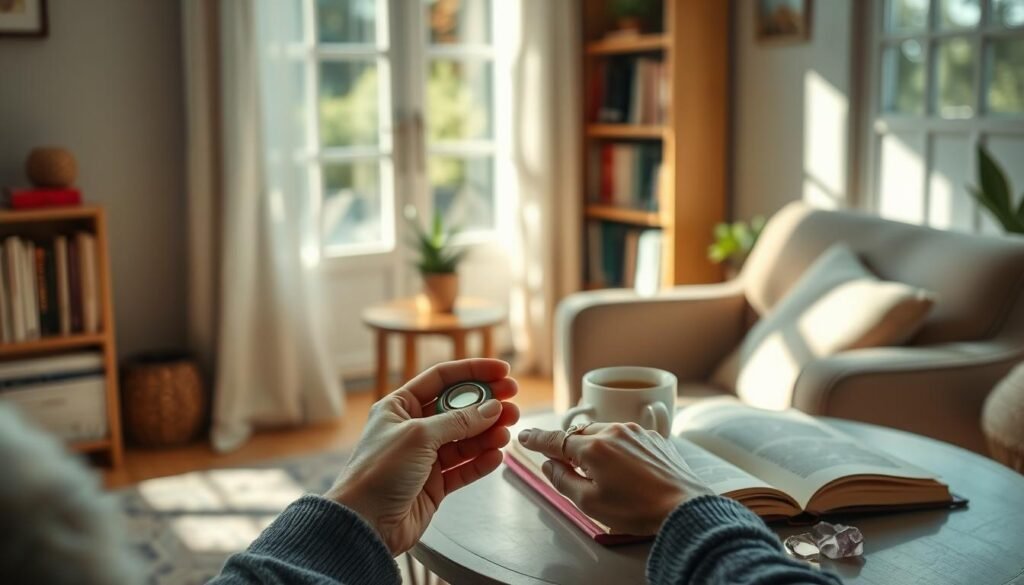
Lifestyle Changes to Manage Mild Anxiety
Making lifestyle changes can really help with anxiety. Small adjustments improve well-being and help manage it better. Paying attention to what you eat, how much you move, and your sleep can boost your mental health.
Nutrition and Diet Considerations
A good diet helps keep your mood and energy stable. Eating protein in the morning helps keep your blood sugar stable. Foods like whole grains can help calm you down by raising serotonin in your brain. Be careful with foods that might make your anxiety worse. Also, drinking too much coffee or alcohol can make you jittery or disturb your sleep. Drinking enough water is very important, as not doing so can make you feel worse.
Physical Activity and Exercise
Being active is great for managing anxiety. Activities like running or just a quick walk every day can make you feel happier. Many people find that regular exercise helps them feel less anxious. It also makes them feel clearer mentally and stronger emotionally.
Sleep Hygiene for Better Mental Health
Getting good sleep is super important for feeling emotionally balanced. Adults need 7 to 9 hours of sleep each night. Following a regular bedtime routine and cutting down on screen time before bed can help. This can lead to better sleep, which helps reduce anxiety and promotes positive lifestyle changes.
The Role of Support Systems in Managing Anxiety
Dealing with anxiety is tough, but support systems are key. They give us the tools and cheer we need. Having loved ones by our side makes the journey easier, offering strength and comfort.
A solid network can really help ease anxiety.
Family and Friends as Resources
For those facing anxiety, family and friends are super important. They give patience and understanding. This helps create a safe space to share feelings.
Talking about emotions with them helps fight the stigma around anxiety. Small acts like checking in or doing fun stuff together make a big difference. They help lessen anxiety.
Seeking Professional Help
It’s also smart to look for professional help. Experts can show you specific ways to deal with anxiety. Using services like Dawn Health means getting help fast, without the wait.
Support Groups and Communities
Support groups have a big impact too. They let you meet others who get what you’re going through. It’s comforting to share stories and not feel alone.
Being part of a group with similar struggles can be really helpful. It makes you feel like you belong, aiding in your anxiety relief journey.
| Support System | Benefits |
|---|---|
| Family | Emotional support, understanding, and encouragement |
| Friends | Shared activities, companionship, and distraction from stressors |
| Professional Help | Tailored strategies and therapeutic techniques |
| Support Groups | Community connection and shared experiences |
When to Seek Professional Help
Knowing when anxiety becomes too much to handle alone is key. Many people feel their daily lives, friendships, and overall happiness get hurt by persistent anxiety. Getting professional help can provide the support needed. Knowing the right time to ask for help can make a big difference.
Signs That Indicate More Than Mild Anxiety
Spotting signs that anxiety is more than just a little worry is crucial. Look for signs like:
- Constant worry or fear that messes with everyday life.
- Physical signs such as headaches, stomach pains, or fast heartbeat.
- Avoiding certain places or situations because anxiety gets worse.
- Panic attacks that last 5 to 30 minutes, filled with intense fear.
- Having a hard time making choices because anxiety takes over.
Types of Professionals to Consider
When looking for professional help, there are different experts to choose from, like:
- Therapists: They’re licensed to help and use techniques like cognitive-behavioral therapy (CBT).
- Psychologists: Experts who diagnose and treat anxiety with tests and therapy.
- Psychiatrists: Doctors who can also give medication along with therapy to treat anxiety.
What to Expect in Therapy
In therapy, talking about what causes your anxiety and figuring out ways to deal with it is common. You might do things like:
- Seeing patterns in how you think and act that relate to anxiety.
- Trying out therapies like CBT, which helps a lot of people.
- Having regular sessions that focus on you and giving you tools to handle anxiety better.
Going to therapy is a big help, but it’s also important to know you can ask for help anytime. Using resources like the NHS’s free talking therapies can be a big step towards feeling better.
Natural Remedies and Treatments for Mild Anxiety
Many people tackle anxiety with natural remedies. They like these methods because they are soft and usually don’t cause side effects. There are proven options like herbal supplements, essential oils, and yoga. These help in controlling anxiety well.
Herbal Supplements and Their Effects
Herbal supplements are popular for calming nerves. For instance, chamomile can cut anxiety symptoms in half, studies show. Lavender, used in aromatherapy, can reduce anxiety by 30%.
Lemon balm also eases stress and excitement. It’s good for managing anxiety.
Aromatherapy for Relaxation
Aromatherapy uses scent to lessen anxiety. Lavender essential oil, in particular, promotes relaxation and emotional steadiness. Adding these scents to your daily life can make spaces more tranquil. It helps lower anxiety levels.
Yoga and Its Benefits
Yoga is great for anxiety as it combines exercise, breathing, and focusing. Studies say doing yoga regularly can really lower anxiety. It benefits both the mind and body, improving overall health.
Building Resilience Against Mild Anxiety
Building strength against anxiety helps you handle its mild forms better. With the right coping methods, managing symptoms becomes easier. This improves your mindset. We’ll look at ways to build this resilience, like staying positive and making goals.
Developing Coping Strategies
Coping methods are key for handling anxiety. Mindfulness and cognitive therapy change negative thoughts. Writing daily in a journal helps reflect on thoughts and deal with stress better. Setting aside specific times to worry can also help control overwhelming thoughts, lowering anxiety.
The Power of Positive Thinking
Thinking positively can really make a difference in fighting anxiety. Saying positive things to yourself and imagining good outcomes changes how you see tough situations. Being optimistic helps with symptoms and emotional health. Having supportive friends or family around makes staying positive easier.
Setting Realistic Goals
It’s vital to set goals that are realistic to lessen anxiety and get healthier. Breaking big tasks into smaller parts creates a feeling of success, increasing confidence. It’s good to review and adjust these goals, helping build more resilience against anxiety. Meeting goals shows you your progress, making you believe more in your ability to handle anxiety.
Resources and Tools for Coping with Mild Anxiety
There are many resources available for mild anxiety management. This includes apps for guided meditations and tracking moods. Also, reading about mental wellness can help build coping skills. Plus, online courses and workshops can improve how you manage anxiety.
Recommended Apps for Anxiety Management
Apps like Headspace and Calm offer help with meditation, sleep, and stress. They meet various needs and support personal coping paths. Using these apps daily helps create peaceful moments in busy lives.
Books on Anxiety and Mental Health
Books such as “The Anxiety and Phobia Workbook” by Edmund J. Bourne give insights on coping with anxiety. They cover understanding emotions, triggers, and managing anxiety effectively. This knowledge builds a foundation for personal growth.
Online Courses and Workshops available
Online courses on sites like Coursera and Skillshare focus on managing anxiety. They teach mindfulness, cognitive-behavioral therapy, and relaxation techniques. These courses equip individuals with skills for better anxiety management, improving their well-being.
FAQ
What are some common mild anxiety symptoms to look for?
How can I differentiate between mild anxiety and more severe anxiety disorders?
What are the common causes of mild anxiety symptoms?
How do mild anxiety signs vary among individuals?
Why is it important to address mild anxiety symptoms early?
What coping strategies can help with mild anxiety symptoms?
How can lifestyle changes support anxiety management?
How do support systems aid in coping with mild anxiety?
When should someone seek professional help for mild anxiety symptoms?
What natural remedies are effective for alleviating mild anxiety?
What techniques can build resilience against mild anxiety?
What resources are available for individuals coping with mild anxiety?
Source Links
- Generalized Anxiety Disorder: When Worry Gets Out of Control
- Mild Anxiety: What it is and How to Treat It
- Signs and Symptoms of Anxiety Disorders
- What are Anxiety Disorders?
- Anxiety – StatPearls – NCBI Bookshelf
- Anxiety disorders – Symptoms and causes
- Generalized anxiety disorder – Symptoms and causes
- Anxiety: Symptoms, types, causes, prevention, and treatment
- How to Tell the Difference Between Nervousness and Anxiety
- All About Anxiety Disorders: From Causes to Treatment and Prevention
- Chapter 9 Anxiety Disorders – Nursing: Mental Health and Community Concepts
- Anxiety disorders
- How to Cope with Anxiety: 11 Simple Tips
- What doctors wish patients knew about managing anxiety disorders
- Find out how food and anxiety are linked
- 5 lifestyle changes that may help with managing anxiety or depression
- The role of self-help in the treatment of mild anxiety disorders in young people: an evidence-based review
- How to Manage Anxiety with Therapy
- Anxiety self-help guide
- Get help with anxiety, fear or panic
- How to Know When to Seek Therapy
- Anxiety disorders – Diagnosis and treatment
- Natural Remedies to Alleviate Anxiety
- Herbal treatment for anxiety: Is it effective?
- Anxiety – Every Mind Matters
- Crippling Anxiety: Strategies for Relief
- Tips and Strategies to Manage Anxiety and Stress
- Natural Remedies for Anxiety: 10 Ideas