Anxiety is more than just a feeling. It combines emotions and physical responses that deeply affect our daily lives. Have you thought about how anxiety shows up physically, impacting your health? Managing these physical effects is key to your well-being. With the rise of anxiety disorders, more people face headaches, tight muscles, and stomach problems.
Since everyone’s anxiety is different, finding effective relief is important. This article explores how to ease these physical symptoms through relaxation, good eating habits, meditating, and changes in our daily routines. By taking a holistic approach, we can handle anxiety better and enhance our life quality.
Key Takeaways
- Common physical symptoms of anxiety include headaches, muscle tension, and digestive issues.
- Anxiety can trigger the fight-or-flight response, leading to increased heart rate and rapid breathing.
- Effective coping strategies encompass relaxation techniques, regular exercise, and healthy lifestyle choices.
- Seeking professional help is vital when symptoms disrupt daily life or persist over time.
- Mindfulness practices and diet can significantly reduce anxiety symptoms and improve overall mental health.
Understanding Physical Symptoms of Anxiety
Knowing the physical signs of anxiety is key to managing its effects on your day. Many people face different symptoms, which can hurt their health. Recognizing these signs helps one find ways to lessen anxiety’s physical impact and make life better.
Common Physical Symptoms
Anxiety shows up in many physical ways that might surprise you. Common symptoms are:
- Increased heart rate
- Sweating
- Trembling
- Shortness of breath
- Muscle tension
- Dizziness
- Digestive issues such as nausea and irritable bowel syndrome
These symptoms can make dealing with anxiety harder, adding more stress and unease.
The Connection Between Mind and Body
Our minds and bodies are closely linked, so emotional stress affects us physically. Anxiety raises blood pressure, tightens muscles, and weakens our immune defence. These effects may turn into long-term problems if ignored. Knowing how our emotions and physical health connect is key for tackling anxiety.
When to Seek Help
It’s important to know when anxiety severely impacts your life. If it disturbs your work, social life, or enjoyment, it’s time to get professional help. Getting help early offers the resources needed to manage anxiety better and lift one’s well-being.
Breathing Techniques to Reduce Anxiety
Breathing exercises are key to managing anxiety and bring a sense of calm. They help with anxiety by controlling breathing, leading to less stress and shallow breaths. These techniques involve breathing in and out in special ways to lessen anxiety signs.
Deep Breathing Exercises
Deep breathing helps calm the body by working with our nervous systems. By breathing in for four seconds and out for six, you can feel less anxious quickly. If you do this for up to 10 minutes several times a day, it becomes a helpful habit.
Box Breathing Method
Box breathing is a step-by-step way to tackle anxiety. You breathe in, hold it, breathe out, and pause, all for four seconds each. This balanced breathing helps steady your breath, calm your mind, and lower anxiety.
Diaphragmatic Breathing
Diaphragmatic breathing moves the focus to deeper breathing, using the diaphragm. It’s not just relaxing; it also boosts well-being. Doing this for up to 20 minutes daily makes you more aware of how you breathe and feel, helping fight anxiety. Different methods like lion’s breath keep the practice interesting and effective in anxiety control.
https://www.youtube.com/watch?v=3cXGt2d1RyQ&pp=ygUJI2FueGlldHlh
The Role of Physical Activity in Anxiety Relief
Being active is essential in treating anxiety mindfully. Doing physical activities boosts both your body and mind health. It helps release endorphins, improving your mood and acting as a natural anxiety relief. Below, we talk about exercise benefits, suggest different workouts, and share tips for sticking with them.
Benefits of Exercise
Exercise does more than make you fit. Being active regularly helps with:
- Reduced anxiety and depression symptoms
- Improved mood through the release of endorphins
- Enhanced self-confidence and social interactions
- Better sleep quality, essential for mental health
- Lower risks of chronic diseases, contributing to overall well-being
Recommended Types of Workouts
Different exercises fit different people and fitness levels:
- Aerobic exercises: Running, swimming, cycling—these boost your heart rate and endorphins.
- Strength training: Helps build muscle and improve overall body strength.
- Yoga and Pilates: Focus on flexibility and mindfulness, promoting relaxation and reducing stress.
- Martial arts: Enhances self-efficacy and body awareness, often leading to reduced state anxiety.
Creating a Regular Exercise Routine
Sticking to a regular workout plan is key for managing anxiety. Experts suggest:
- Setting realistic goals: Start small and gradually increase intensity or duration.
- Incorporating various activities: This keeps the routine fresh and engaging.
- Finding enjoyable exercises: Physical activity feels less burdensome when it’s fun.
- Scheduling workouts: Prioritizing exercise as a part of daily life fosters commitment.
The Importance of Nutrition for Mental Health
The link between nutrition and mental health is significant. Diet is key in handling anxiety and boosting well-being. Some foods help with anxiety, while others can worsen it. Knowing what to eat is crucial in managing anxiety.
Foods That Help Ease Anxiety
Eating certain foods can help control anxiety. For example, having protein at breakfast can keep blood sugar levels steady. This leads to energy all day. Eating complex carbs like oatmeal and whole-grain bread helps. They can raise serotonin levels, which might make you feel calmer.
- Fatty fish (e.g., salmon) rich in omega-3 fatty acids promotes brain health.
- Nuts and seeds provide healthy fats and magnesium, which can improve mood.
- Fresh fruits and vegetables are high in antioxidants and support overall mental well-being.
The Impact of Caffeine and Sugar
Eating too much sugar and caffeine can hurt your mental health. Too much sugar can cause energy and mood to dip and rise too fast. Caffeine might make you jittery and more anxious. It’s best to avoid it 10 hours before sleeping. Not drinking enough water can also affect your mood, showing the need to drink plenty.
“A balanced diet rich in fresh fruits, vegetables, and omega-3 fatty acids is encouraged for overall mental health.”
Establishing Balanced Meal Plans
Making balanced meal plans is important for steady energy and handling anxiety. Focusing on nutritional value can keep blood sugar stable and supply needed nutrients for the brain. Along with dietary changes, getting better sleep and exercising regularly can help manage anxiety.
| Food Type | Benefits | Recommendations |
|---|---|---|
| Protein (e.g., lean meats, legumes) | Stabilizes blood sugar | Include at breakfast |
| Complex Carbs (e.g., whole grains) | Boosts serotonin levels | Replace simple sugars |
| Fruits and Vegetables | Rich in antioxidants | Eat a variety daily |
| Healthy Fats (e.g., nuts, fatty fish) | Promotes brain function | Incorporate into meals |
Mindfulness and Physical Symptoms
Mindfulness is a strong way to deal with the physical signs that come with anxiety. By focusing on the now, people learn to watch their thoughts and feelings without judging them. This helps to stop anxiety from getting worse, making it a good way to naturally fight anxiety.
Studies show the growing popularity of techniques like Mindfulness-Based Stress Reduction (MBSR) and Mindfulness-Based Cognitive Therapy (MBCT). Both have been proven to help lessen anxiety symptoms.
How Mindfulness Works
Mindfulness boosts awareness and calmness. Research has shown that it works better than some other treatments in lowering anxiety. Paying attention to the present helps improve how we react emotionally, offering a whole-way approach to deal with anxiety.
People practicing mindfulness often feel less anxious. They report feeling better in different aspects of their lives and in various groups of people.
Practicing Mindfulness Daily
To really benefit, it’s important to practice mindfulness every day. Simple actions, like meditation or mindful breathing, can greatly help control anxiety. Just 20 minutes daily can make a big difference in feeling mentally better. This can even reduce anxiety signs like fast breathing or a speeding heart.
Incorporating Mindfulness Into Routines
Adding mindfulness into daily life is great for keeping strong emotionally. You can include practices in daily activities, like mindful walking or deep breathing exercises. Doing mindfulness in different places, even outside, makes it work better, helping more with anxiety.
Over time, these methods become almost second nature, continuing to help mental health a lot.
| Mindfulness Practice | Benefits |
|---|---|
| Body Scanning | Reduces physical and mental stress |
| Gratitude Journaling | Lowers stress and anxiety, boosts contentment |
| Mindful Breathing | Calms the nervous system, alleviates symptoms |
| Outdoor Mindfulness | Enhances mental health, improves mood |
Relaxation Techniques to Manage Symptoms
Relaxation methods are key in fighting off anxiety and making you feel better. They help shift focus, lessen stress, and bring peace. Using these techniques can improve how you handle emotions and make life more enjoyable.
Progressive Muscle Relaxation
Progressive Muscle Relaxation (PMR) is a method where you tense then relax your muscles. You tense each muscle for about five seconds, then release for thirty. This helps you notice how your body feels. It’s great for reducing stress, calming your heart rate, and lowering blood pressure. PMR can also ease muscle tightness and pain, which is great for anxiety relief.
Visualization Techniques
Visualization makes you imagine peaceful places using all your senses. This technique shifts your focus from worry to calm scenes. It helps you feel deeply relaxed, happier, and less stressed. Regularly visualizing peaceful scenes can help you focus better and lift your spirits, helping with anxiety.
Gentle Yoga and Stretching
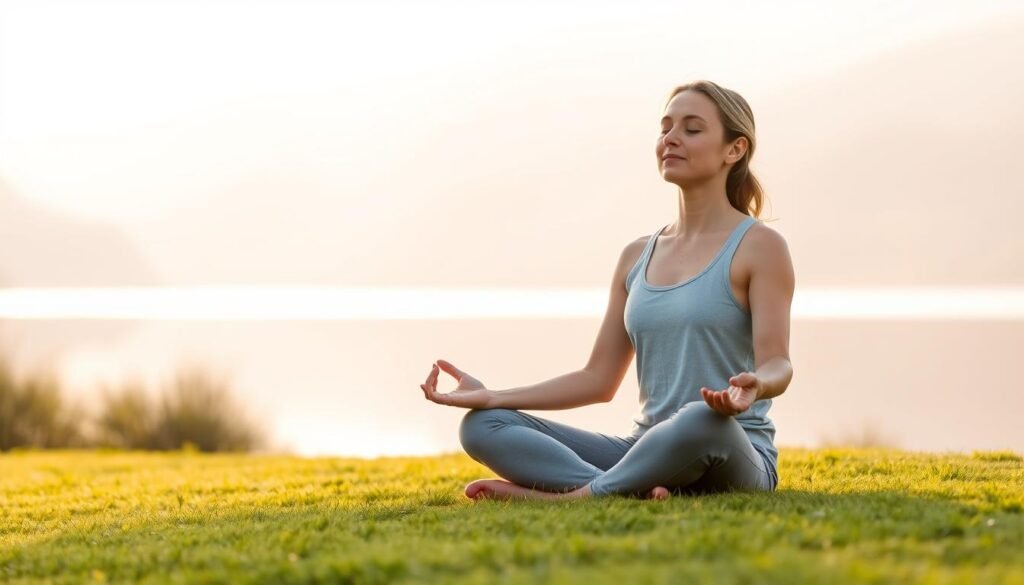
Doing gentle yoga and stretching is good for body awareness and mental clarity. These activities involve deep breathing and slow movements to help relax and reduce anxiety. Adding gentle yoga to your daily routine not only makes you more flexible but also helps with muscle tension. These exercises connect your mind and body, creating a peaceful feeling that is good for your mental health.
Utilizing Essential Oils and Aromatherapy
Aromatherapy uses essential oils to help manage anxiety. This natural approach is getting more popular. It helps people relax and feel better mentally. Oils like lavender, bergamot, and chamomile are great for calming down.
Best Essential Oils for Anxiety
Some essential oils work really well for anxiety. Studies show they help:
- Lavender – It has a soothing scent that lowers anxiety during stressful times.
- Bergamot – Helps reduce anxiety, especially before operations.
- Chamomile – Its calming effect helps ease anxiety and relaxes you.
- Clary sage – This one can lessen anxiety-related physical signs like high heart rate.
- Rose – Good for reducing anxiety and making you feel relaxed.
Methods of Application
There are many ways to use essential oils:
- Diffusion – Spreading oils into the air with a diffuser makes the room calming.
- Topical application – Mixing essential oils with other oils for your skin helps you relax.
- Baths – Putting essential oils in bathwater makes bathing more soothing. It helps relieve tension.
Creating a Calming Environment
Tips for a peaceful space at home:
- Pick a quiet area for calming scents.
- Use soft colors and simple designs to relax.
- Add plants to clean the air and calm the mood.
Learning how to ease anxiety symptoms with essential oils and aromatherapy is effective and enjoyable. It’s part of a bigger move towards natural healing methods. These methods are popular among those looking for natural ways to handle anxiety.
The Impact of Sleep on Anxiety Levels
Sleep quality deeply affects how anxious we feel. About 20% of American adults deal with anxiety disorders. Those with Generalized Anxiety Disorder (GAD) and Panic Disorder often struggle with sleep.
There is a clear link between sleep and anxiety. Not sleeping well can make anxiety worse. Getting good sleep helps keep you calm. Knowing about this link is key in managing anxiety better.
Understanding Sleep and Anxiety Link
The connection between sleep and anxiety is both complex and two-way. Anxiety can lead to sleep troubles, making anxiety even stronger. People with sleep issues like insomnia often have more anxiety.
Studies show that 24% to 36% of people with insomnia also suffer from anxiety disorders. It’s important to deal with sleep problems when reducing anxiety.
Tips for Better Sleep Hygiene
To improve sleep quality and ease anxiety, try these tips:
- Maintain a consistent sleep schedule by going to bed and waking up at the same time each day.
- Create a calming bedtime routine, such as reading or practicing relaxation techniques.
- Limit exposure to screens at least an hour before bedtime to promote the release of melatonin.
- Design a comfortable sleep environment with appropriate lighting and temperature.
- Avoid caffeine and heavy meals close to bedtime.
Sleep Disorders and Help
It’s key to recognize sleep disorders when dealing with anxiety. Insomnia and other sleep issues are common in those with anxiety. Issues like hypersomnia are also common.
Getting professional help for these sleep challenges is crucial. Successfully managing sleep can greatly improve mental health and handling anxiety.
Cognitive Behavioral Therapy Techniques
Cognitive Behavioral Therapy (CBT) is a structured way to tackle anxiety challenges. It’s a top choice for treating anxiety disorders, aiming to change negative thoughts that make anxiety worse. This method uses several strategies. It helps people deal with anxiety by changing how they think and act.
What is CBT?
CBT looks at how our thoughts, feelings, and actions are connected. It helps people see how their thoughts about situations make their anxiety worse. This approach works on both the mind and body. It offers a complete plan for dealing with anxiety.
How CBT Addresses Physical Symptoms
Many people feel anxiety in their bodies, like muscle stiffness or a fast heartbeat. CBT teaches relaxation methods such as deep breathing to help ease these signs. It also uses exposure therapy. This helps people face their fears slowly to reduce their anxiety over time.
Finding a Therapist
It’s crucial to find a skilled therapist who knows CBT if you want to get better. Sites that offer online therapy can connect you with licensed pros. Group therapy can also help, especially with social anxiety. Working with a good therapist makes managing anxiety easier. It gives you the tools to handle daily issues.
Exploring Medication Options for Anxiety
Medication can help with the physical symptoms of anxiety. Doctors often prescribe SSRIs like sertraline and citalopram for anxiety. These may take up to 12 weeks to work. They can be effective but may have side effects like insomnia, nausea, and sexual issues.
Atypical antidepressants like bupropion and mirtazapine might be used. They can cause dizziness and drowsiness. For tougher cases, drugs like quetiapine are an option. It’s important to know about their side effects, including weight gain and tremors.
Talking to healthcare providers is key to finding the right treatment. They can figure out what works best for you. Along with medication, changes in lifestyle like exercising can also reduce anxiety.
FAQ
What are the physical symptoms of anxiety?
How can breathing techniques help relieve anxiety?
What type of exercise is best for managing anxiety?
How does nutrition affect anxiety levels?
Can mindfulness practices reduce symptoms of anxiety?
What relaxation techniques work well for managing anxiety?
How does aromatherapy aid in relieving anxiety?
Why is sleep quality important for anxiety management?
What is Cognitive Behavioral Therapy (CBT) and how does it help?
What types of medications are commonly prescribed for anxiety?
Source Links
- Understanding Anxiety’s Physical Impact: Coping Strategies
- Get help with anxiety, fear or panic
- Anxiety disorders – Symptoms and causes
- Physical Symptoms of Anxiety
- 8 Breathing Exercises for Anxiety You Can Try Right Now
- Breathing exercises for anxiety
- Breathing Practices for Stress and Anxiety Reduction: Conceptual Framework of Implementation Guidelines Based on a Systematic Review of the Published Literature
- Effects of Exercise and Physical Activity on Anxiety
- Depression and anxiety: Exercise eases symptoms
- Exercise and stress: Get moving to manage stress
- Find out how food and anxiety are linked
- Diet and Anxiety: A Scoping Review
- Mindfulness-Based Interventions for Anxiety and Depression
- Can mindfulness exercises help me?
- 7 Mindfulness Exercises for Anxiety
- Relaxation techniques: Try these steps to lower stress
- Relaxation Techniques – StatPearls – NCBI Bookshelf
- Best essential oils for relieving anxiety
- Can Aromatherapy With Essential Oils Provide Stress Relief?
- Essential oils for treating anxiety: a systematic review of randomized controlled trials and network meta-analysis
- Anxiety and Sleep
- Sleep and anxiety disorders – PMC
- Cognitive-Behavioral Treatments for Anxiety and Stress-Related Disorders
- How Cognitive Behavioral Therapy Can Treat Your Anxiety
- Medication for Anxiety Disorders
- Anxiety Medication – HelpGuide.org
- Medications to Treat Anxiety Disorders